First Connect at Insurtech Insights USA 2026: Here’s What the Room Was Saying

We were at the Javits Center in New York last week for Insurtech Insights USA 2026. Six thousand people gathered over two days, and the industry delivered one clear message. Here’s what we brought back.
The energy in the building was different from years past. The “should we invest in AI?” conversation is done. What replaced it was sharper and more honest: do you have the data infrastructure to back up what you’re trying to build?
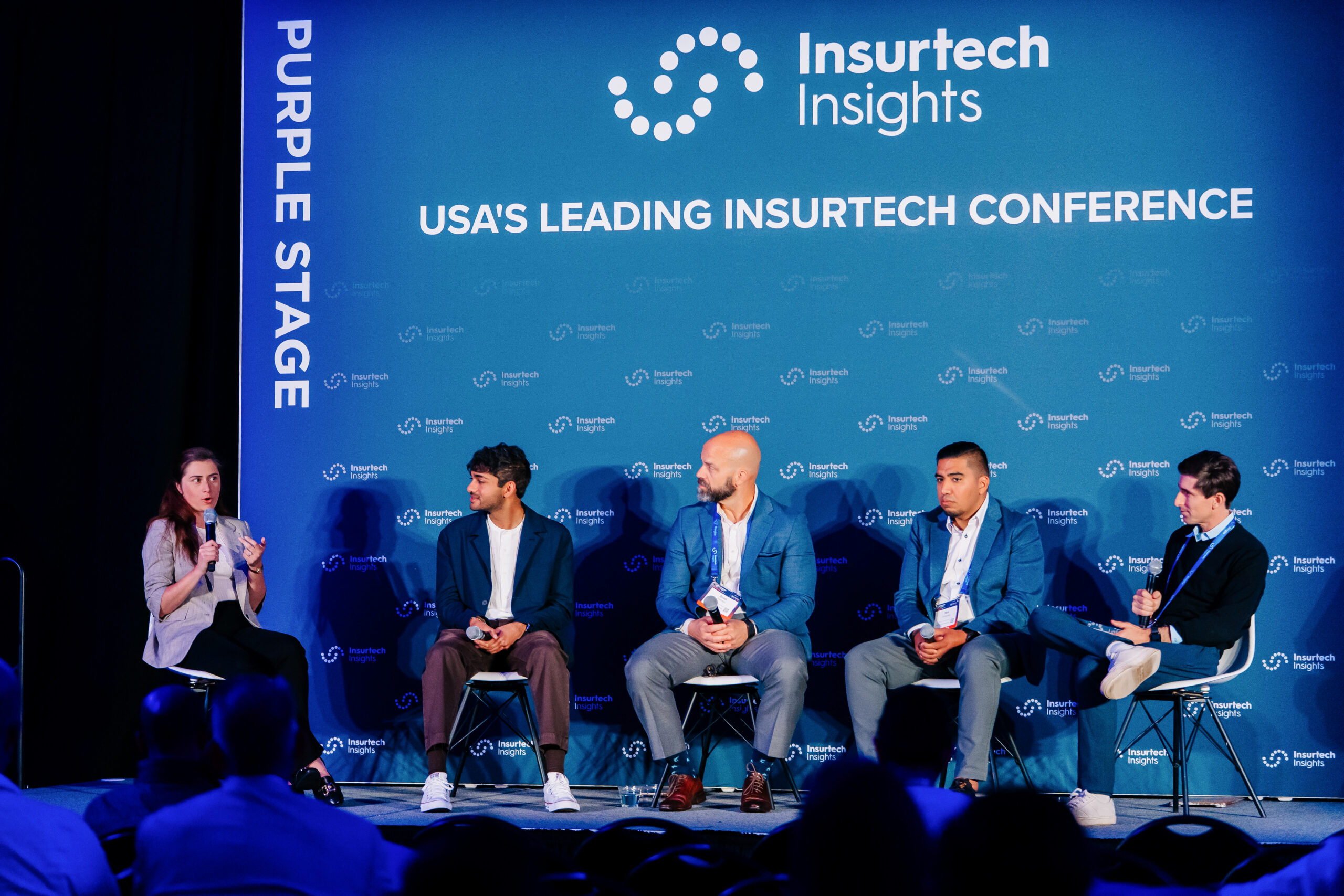
Our CEO Aviad Pinkovezky shared his perspective on the main stage and our VP of Customer Success & Agency Operations Noe Gonzalez sat on a distribution panel with other industry thought leaders. We spent time in sessions, on the floor, and in conversations with carriers, MGAs, and reinsurers, and we left with a clear picture of where the industry is heading.
Independent Agents!
Accelerate Your Agency’s Success
 Top Commissions
 No Fees
 Instant Access
The AI debate is settled. The data infrastructure debate is just starting.
Christian Freytag, Group CTO at Allianz, opened day one with these words: “Dream big or go home.” He and Mike Ram, Head of Insurance at Anthropic, made the case that the AI moment in insurance isn’t theoretical anymore. It’s operational. Who’s ahead and who isn’t comes down to whether your data foundation can hold the weight of what you’re building on top of it.
Kristoffer Lundberg, CEO of Insurtech Insights, framed what the room was absorbing across both days: “The staircase has been built. The insurers who move with speed, trust, and the right controls in place are already climbing it. The data foundation has to match the ambition.”
Why shared data changes the equation.
Aviad joined Pete Shelley, President of Berkshire Hathaway Direct Insurance Company, on the main stage for “When Both Sides See the Same Data: What Changes.” He got right into the data question at the center of every carrier-agent relationship:
“AI expands the market that needs insurance, and the carriers and agents who are sharing data are going to be the ones positioned to serve it. You can’t underwrite what you can’t see, and you can’t place what you don’t know exists.“
He went further on what the marketplace view gives First Connect that no individual carrier has on its own:
“The privileged view a marketplace gets is the same agent’s behavior across dozens of carriers, linked. No individual carrier, no matter how good their internal data, can see that on their own. And what it shows consistently is that quality of match beats breadth of access, every time.“
And on where the cost of that information gap is highest:
“For the carrier, the cost is wasted underwriting cycles. For the agent, it’s wasted placement hours. Both are knowable. The consumer cost is invisible, and structurally the largest.”

Self-service isn’t a feature. It’s who we are.
Noe’s panel examined the ways that self-service automation is reshaping the way agents and carriers connect. His framing of where things stand today was direct:
“First Connect has over 20,000 agencies accessing 150-plus carriers in the marketplace. From an agent perspective, it’s really about data entry and appetite, and how technology is disrupting both. On the carrier side, it’s all about speed to access. Traditionally, it might be weeks or months for an agent to get approved. With us, it could be minutes or seconds. In both channels, it’s really about the path of least resistance.“
On what that means for how First Connect was built:
“Self-service is not an add-on for us. It’s who we are. When we first started, you had to call someone at First Connect to get access to a carrier. Now it could be 1 or 2 o’clock in the morning and you could be requesting your own carrier and getting access instantaneously.“
It’s not a technology failure. It’s a data infrastructure one.
That one clear message kept showing up in places you’d least expect it. The claims track discussed an impactful concrete example: adjusters currently spend about 80 percent of their time moving data between systems rather than doing actual claims work. Andy Cohen of Snapsheet framed the goal as making adjusters “superhuman” by clearing the administrative load so they can get back to the judgment calls only experience can make. That’s not a technology problem. It’s what a broken data foundation looks like when it reaches the people doing the work.
What we took away
The conversations we had at the Javits Center (on stage, in the halls, in meetings) kept coming back to the same questions First Connect has been building answers to for years. How do you get the right agent in front of the right carrier, with a submission that actually fits? How do you make distribution work for everyone in the chain, not just the biggest players?
Six thousand people were asking those questions out loud last week. The answers are what we build every day.
Learn more about First Connect.
Independent Agents!
Accelerate Your Agency’s Success
Top Commissions
No Fees
Instant Access