First Connect 2026 State of the Industry Report
The Adoption Tipping Point
The insurance distribution landscape is at an inflection point, and this year, the data is telling a more encouraging story than it has in recent memory. For the first time, we’re seeing real, measurable improvement in the friction that has defined carrier-agent relationships for over a decade. But as old challenges ease, new ones are taking shape.
Our 2026 State of the Industry Report draws on responses from 238 independent agents and 44 carrier and MGA partners across the First Connect ecosystem. Here are the key findings that every agent and carrier should know.
Independent Agents!
Accelerate Your Agency’s Success
 Top Commissions
 No Fees
 Instant Access
Carrier-Agent Friction Is Falling Across the Board
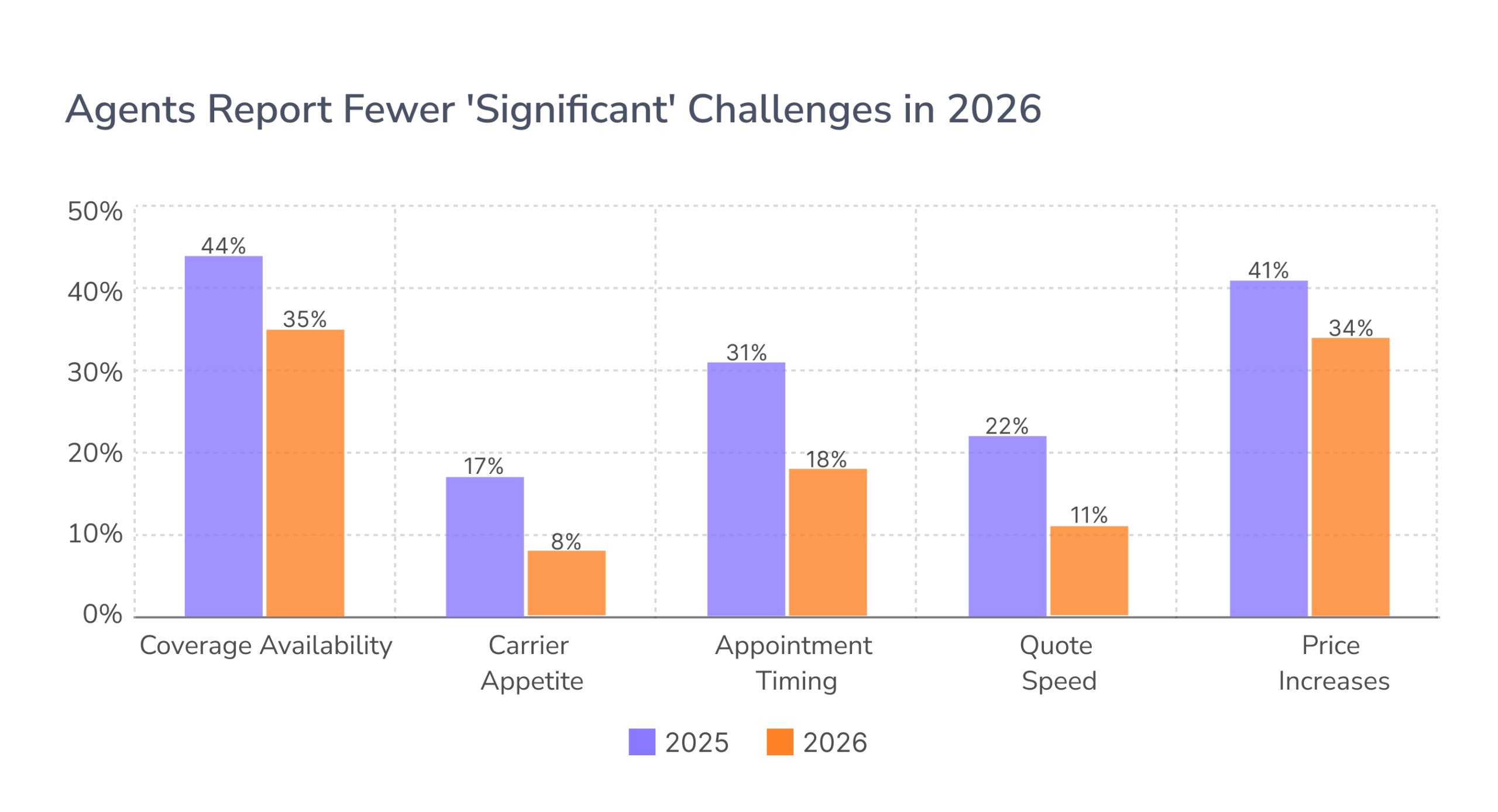
The most important finding in this year’s report is also the most encouraging: across every dimension we measured, agents reported fewer significant problems with their carrier partners than they did in 2025.
- Quote speed: Significant challenges dropped by half, from 22% to 11% year-over-year.
- Carrier appetite clarity: Down from 17% to 8%, a more than 50% improvement.
- Appointment timing: Fell from 31% to 18%, a 42% decline.
- Coverage availability: Dropped from 44% to 35%.
Declines that sharp, across that many categories at once, don’t happen without something real shifting underneath. A softening market has helped relieve some of the pressure that strained these relationships in recent years, and so has deliberate investment in better workflows and communication on both sides. As Aviad Pinkovezky, CEO of First Connect, put it: “We’re seeing meaningful improvements in quote turnaround times, appetite transparency and appointment responsiveness. That’s encouraging because partnership is the unit of growth in this industry. When agents and carriers are aligned, both sides spend less time managing friction and more time serving customers and growing their business.” The relationship between agents and carriers is moving from transactional friction toward operational partnership, and that momentum matters.
Customer Expectations Are Rising, and the Competitive Bar With Them
As friction eases on one side, new pressure is building on the other. The single biggest factor reshaping the agent channel in 2026 is direct-to-consumer competition, cited by 43% of respondents, up from 37% in 2025. The proportion of agents naming rising customer expectations for digital experiences as their dominant pressure rose 50% year-over-year, and carriers are feeling the same thing from their side of the table.
- Self-serve quoting, automated prefill, and same-day issuance have moved from competitive differentiators to baseline customer expectations.
- 30% of carriers identified digital experience expectations as the strongest pressure on their market, mirroring what agents are reporting from the front lines.
Independent agents who can’t meet these expectations will lose ground quickly, but the capacity to deliver them doesn’t sit with agents alone. It also sits with the carriers and platforms behind them.
AI Optimism Is High. Adoption Is Still Catching Up.
For the first time, we asked agents directly about artificial intelligence: how they feel about it, whether they’re using it, and where they’d be willing to hand off tasks. What we found was a real gap between enthusiasm and action.
- 53% of agents are optimistic about AI’s long-term impact on the industry.
- Only 35% are currently using AI in day-to-day operations, even among those who believe in it.

The hesitation isn’t irrational. Insurance workflows involve underwriting decisions, regulatory obligations, and real customer outcomes. Caution makes sense. But the window to move deliberately is narrowing. As Pinkovezky noted, “We’re entering what could be described as the fast-follower era for insurance technology. The conversation is shifting from whether the industry should modernize to how quickly organizations can operationalize better intelligence, automation and digital experiences before those capabilities become baseline customer expectations.” The full report goes deeper on where the clearest adoption opportunities are for both agents and carriers.
Most Carriers Still Lack Visibility Into the Broader Market
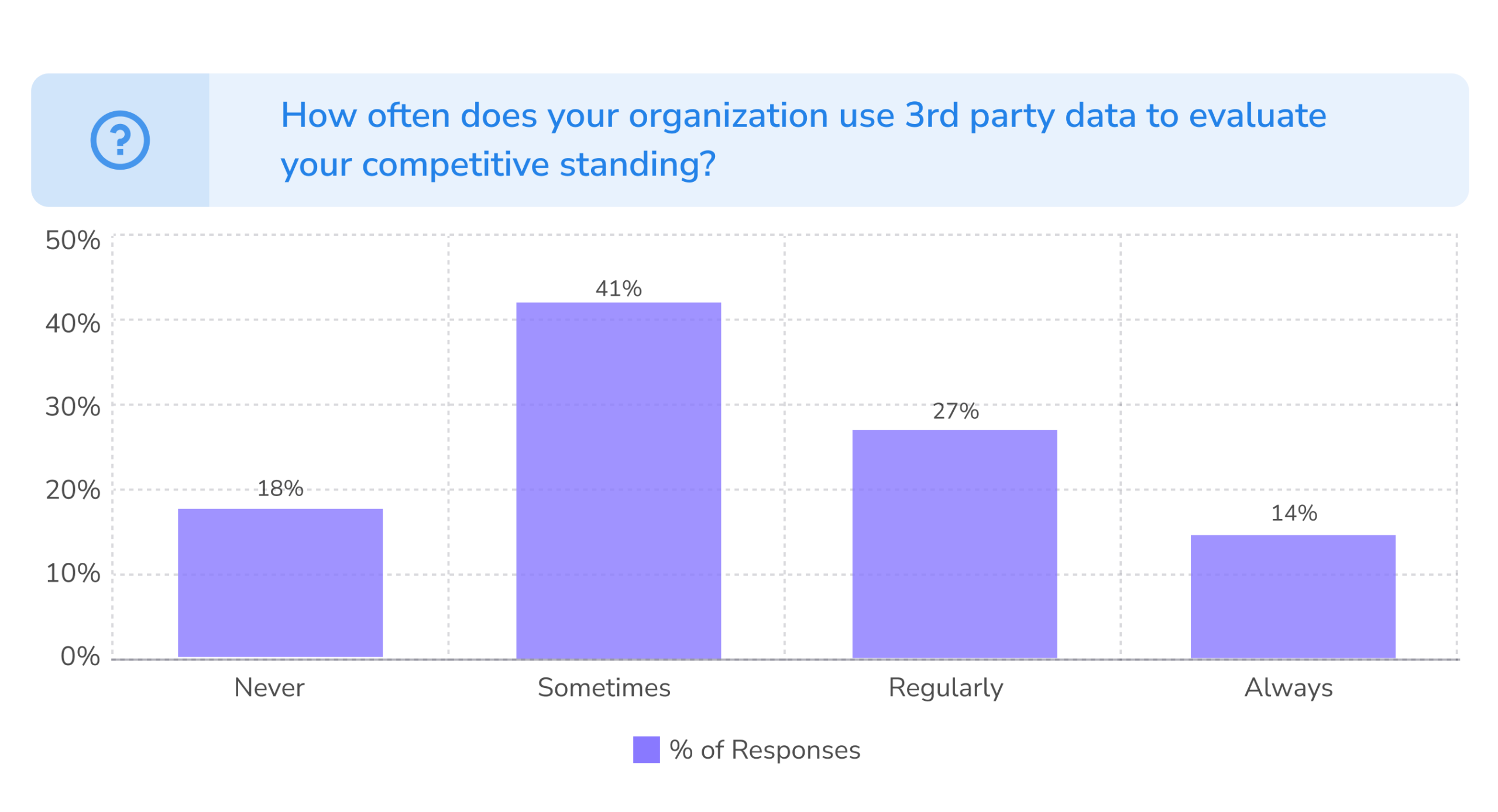
Carrier-agent relationships are operationally stronger than they were a year ago, but one finding stood out clearly: 75% of carriers do not use third-party intelligence platforms to evaluate competitive positioning and market opportunities, often relying instead on internal metrics that show how they’re performing, but not where the market is moving.
- Conversion rates, loss ratios, and premium growth are important indicators, but they only reveal what’s happening inside a carrier’s own book of business.
- They don’t show where agents are placing business elsewhere, how competitive dynamics are shifting across channels, or where new growth opportunities are emerging before someone else finds them first.
“For years, the industry’s biggest challenge was friction,” said Pinkovezky. “Today, it’s visibility. Most carriers are measuring what is happening within their own book of business, but growth increasingly depends on understanding what is happening outside of it. You can be performing well in your own lane and still miss where the market is moving.” In a market that’s fragmenting as quickly as this one, that’s a blind spot worth closing.
What It All Means
The thread connecting all of this is the same: the industry has done the hard work of building better infrastructure, and it’s showing up in the numbers. The next leap isn’t about access to tools or technology. It’s about closing the gap between knowing what’s possible and actually putting it to work. The full report breaks down exactly where that gap is widest, and where agents and carriers who move now will have the clearest advantage.
Download the Full 2026 State of the Industry Report
Download the full First Connect 2026 State of the Industry Report for the complete agent and carrier survey data, a detailed look at market dynamics and distribution trends, and a clear view of where the opportunity sits for agencies and carriers ready to move.
Independent Agents!
Accelerate Your Agency’s Success
Top Commissions
No Fees
Instant Access